
Kabloom Sky Climb
Play Crowdict Draft free online · A ten-question climb

One answer, one chance
Kabloom makes a familiar trivia question into a choice about timing. A correct response can fit more than one prompt, yet you can only use it once. Kabloom.cc gives you a free online way to try that idea in Crowdict Draft’s Sky Climb, a ten-question challenge where the value of each correct answer depends on when you play it.
If you came looking for the original Kabloom, expect a different round length and scoring system here. The original Kabloom climb runs seven questions. In the playable Draft round, every accepted pick has a base score, later prompts multiply the points, and you can continue after a miss. The guide uses Kabloom as a reference for the shared answer rule and explains what changes when you play Sky Climb.
How to start a Kabloom-style climb
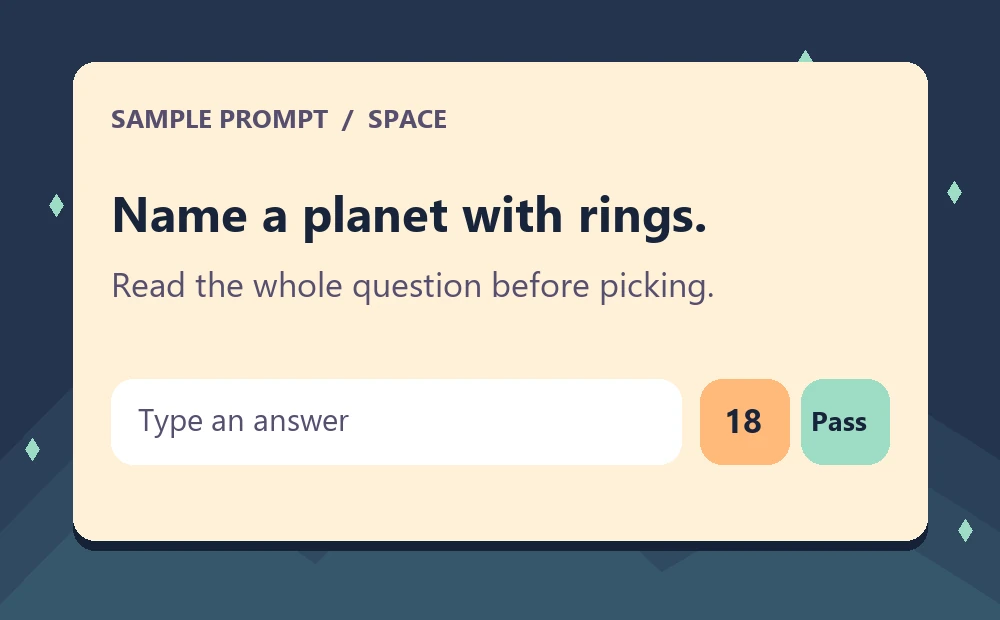
The first thing to look for is the round topic. Every prompt draws from that subject, but the wording determines which names will be accepted. Before you begin, recall several kinds of examples within the topic. If the topic were outer space, you might think of planets, missions, telescopes and people. That small preparation gives you more places to look when the timer is running.
Read the full question before typing. A category may look familiar while a qualifier such as a date or location changes the valid answer set. If you learned the one-use rule through Kabloom, apply it here after checking the wording. Submit an answer you clearly recognise as a match, then follow the feedback in the player. When you miss, try another option while the prompt is active or use Pass to move on.
Spend each answer once
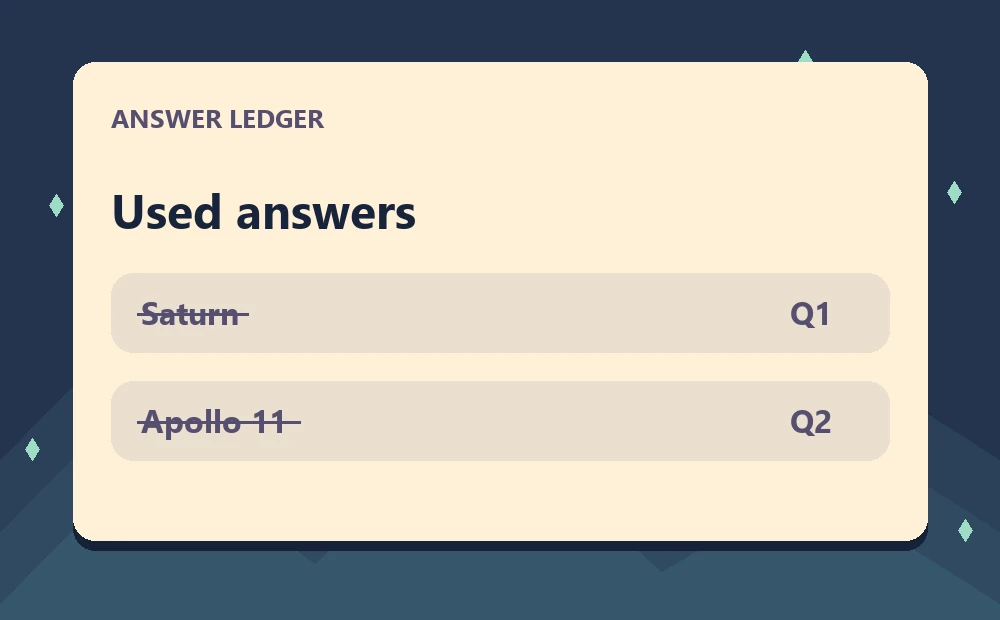
An accepted answer goes into the spent list. That is the feature a Kabloom player will recognise immediately. If both an early broad prompt and a later narrow prompt accept the same answer, the game gives you one chance to earn points with it. Trying another spelling of a spent answer is a poor plan. The restriction is about which answer you use.
Imagine Saturn fits an opening question about planets and could later fit a question about rings. If you are confident in another valid opening pick, you might save Saturn. If you know very little about the subject, using a sure answer early can be the better choice. That is what makes Kabloom-style drafting different from a quiz where every correct response can be considered in isolation.
Read the points ladder before you pick
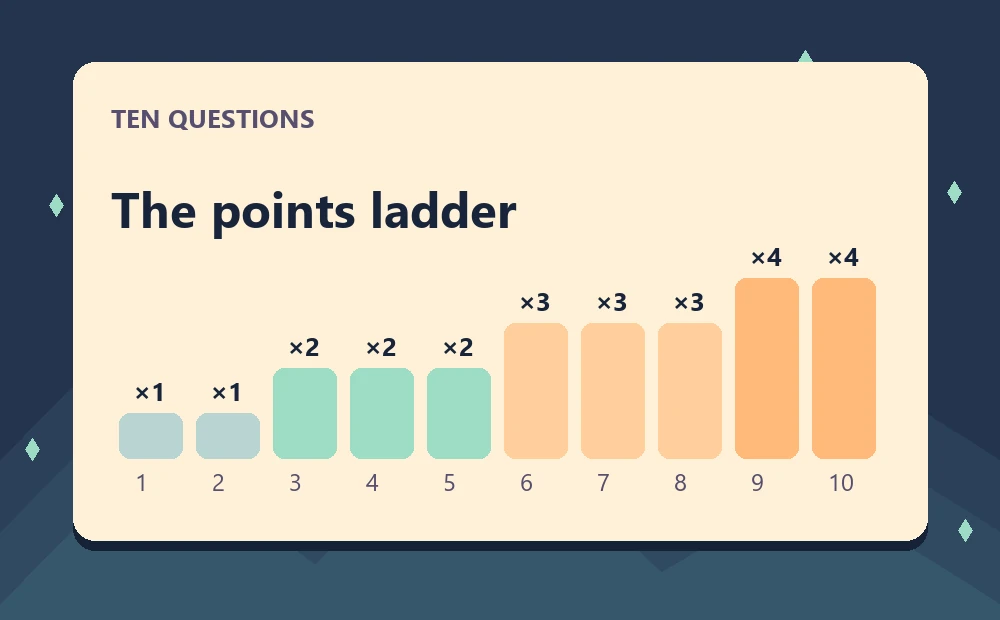
Draft awards a base score according to an accepted answer’s popularity tier. The published tiers are 10, 25, 50, 75 and 100 points. Questions one and two award that value directly. Questions three through five double it, six through eight triple it, and nine and ten multiply it by four. Keep the current weight in mind when adapting a Kabloom strategy to this ten-question round.
Take two answers worth 100 and 50 base points. If both would fit both questions, spending the 100-point answer at ×1 and the 50-point answer at ×4 yields 300. Switching the order yields 450. That 150-point difference explains why reserving a familiar answer can matter. It depends on the later prompt accepting it. The calculator lets you try this Kabloom-style decision with different examples before risking a real round.
Try the Kabloom score calculator
Choose the base points for two hypothetical picks. The planner compares playing the first pick early and swapping the order. This Kabloom example assumes that both answers would be accepted in both positions. Try making them equal to see what happens when their popularity is the same. The totals are practice values for comparing decisions.
Review the decisions behind your total
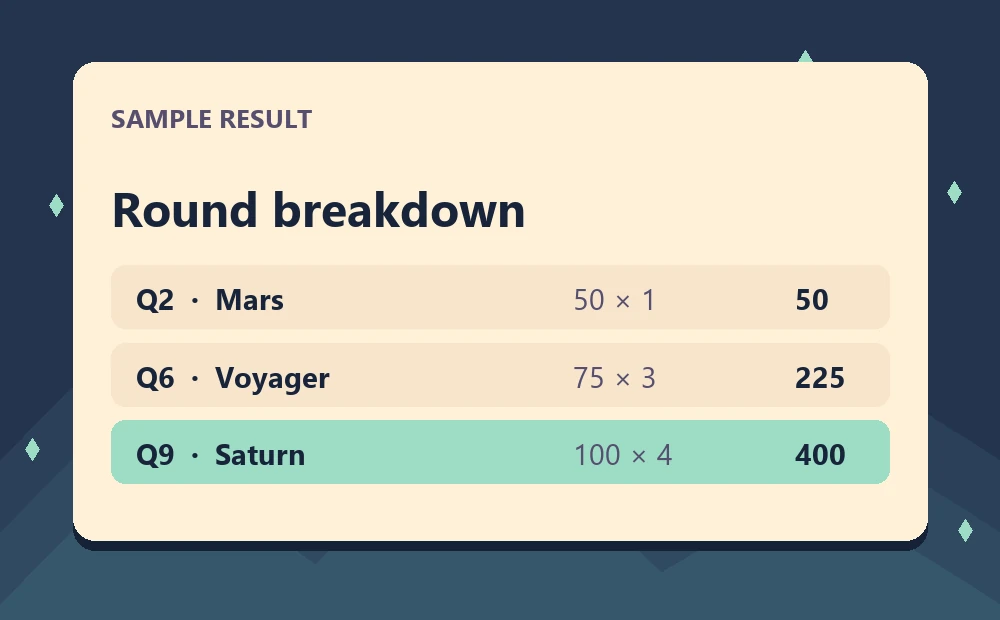
Look at the final breakdown to see which choices contributed most. Start with one early pick and one late pick. Ask whether you knew an alternative for the early prompt, whether the later wording could have accepted your reserved answer, and how the two scores would have compared. This makes a Kabloom review more specific than deciding to save every strong pick.
On your next climb, try a single adjustment. You could check the spent list before typing a famous name, or keep two flexible ideas in mind until the multiplier reaches ×3. An early valid pick can still be worth taking when you have no reliable second option. Over a few rounds, notice which habits help you get more valid answers under time pressure and which ones help you score better with the answers you already knew.
Kabloom questions, answered
Can I play a Kabloom-style game for free online?
Yes. The player opens the free daily Crowdict Draft in its Sky Climb stage. The Kabloom guide and the example calculator are also available in your browser. The game provider controls the current topic and the availability of the live round.
Is this the original Kabloom game?
Kabloom.cc is an independent guide. The playable climb is Crowdict Draft, a separate game built around the shared idea of using an answer once. The original Kabloom uses seven questions, while this climb uses ten and gives later questions larger multipliers.
What happens if I pass or run out of time?
In Draft you earn zero points on that prompt and can continue to the next one, where there is one. A pass does not use an answer. That matters if you are expecting the Kabloom rule where a timeout ends the climb.
What should I do if a response is rejected?
Check whether you spent the answer earlier and whether it satisfies every part of the prompt. If time remains, try a different valid answer. The controls and feedback inside the game tell you what happened.
Does the Kabloom calculator update my game score?
The calculator compares two fictional picks with the same weighting scheme. It runs on this page and changes the example total when you adjust a value. Your play, accepted answers and actual result stay in the embedded game.
Can I use the Kabloom player on a phone?
Open the climb and use the answer field with your on-screen keyboard. If you need more room, try the full-screen control or open the same game in a separate tab. The game runs in an external frame, so browser settings may change how those options behave.
Can I play Kabloom offline after installing this site?
The installation opens the Kabloom guide from your home screen on supported browsers. After a successful visit, the guide and its examples can be cached. The live daily climb needs a connection to its game provider.
Ready for the next Kabloom-style climb?
Pick something you know well, keep an eye on the spent list and see how far your answers take you. Return to this Kabloom guide when you want to compare two strategies.